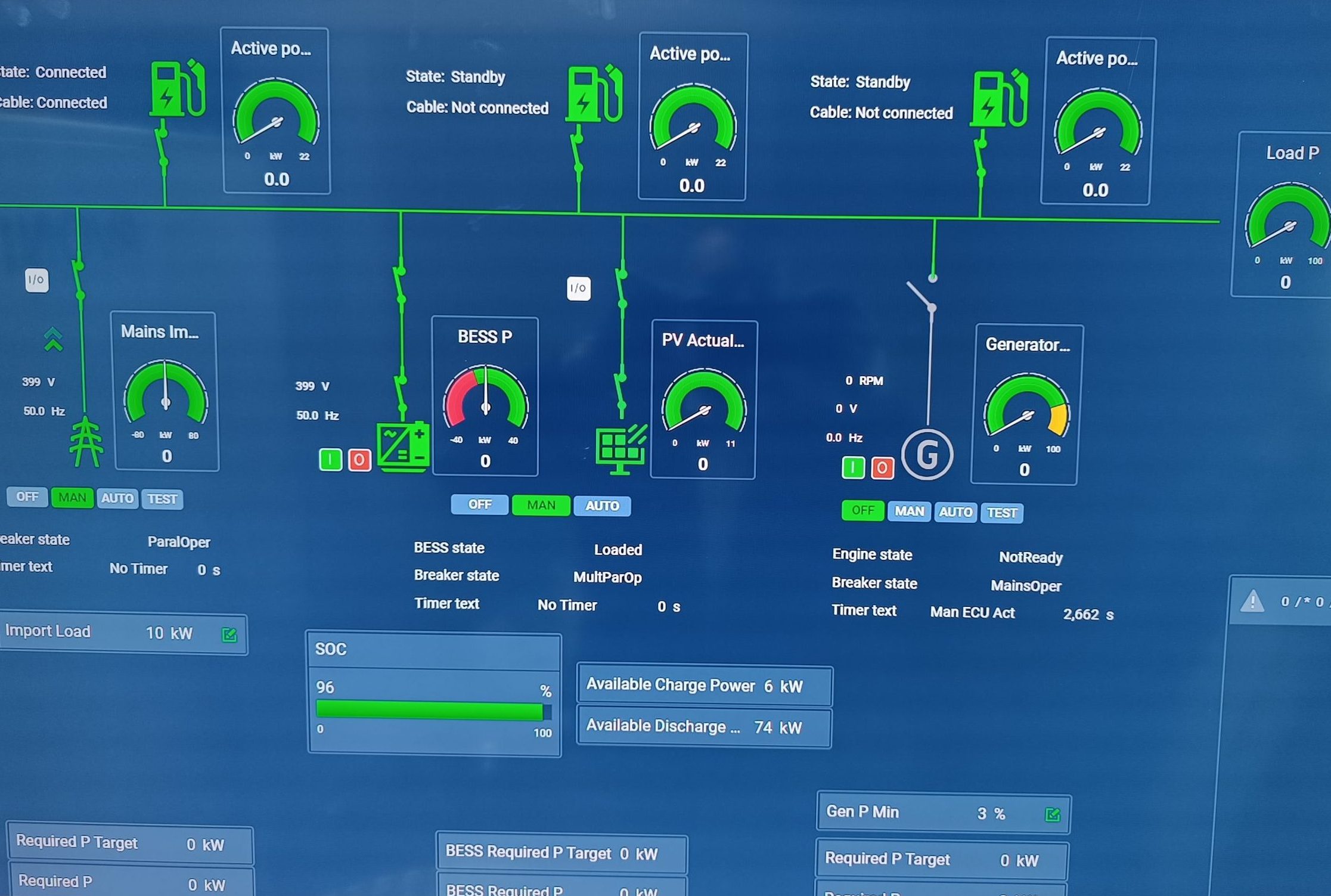
Microgrids bring concrete advantages for energy efficiency, primarily through optimization of consumption, better integration of renewable sources and increased resistance to supply interruptions. In essence, it is a local ecosystem for energy production, distribution and storage that functions either independently or in cooperation with the main grid, providing greater control and flexibility to users.
What are Microgrids?
Before we dive deeper into the benefits, let's clarify what a microgrid actually is. Imagine a smaller, stand-alone power grid that supplies a specific area - say, a university campus, a residential area, military bases, business zones or even a single factory. This grid has its own generation sources (solar panels, small wind turbines, gas generators), energy storage systems (batteries) and management systems that coordinate it all. It can work connected to the wider distribution network (on-grid) or completely independently (off-grid), which is known as "island mode". The goal is to ensure reliable and efficient energy supply, taking into account local specificities and available resources.
One of the most important advantages of microgrids lies in their ability to significantly reduce operating costs thanks to intelligent energy management. This is not just an empty story, but a concrete application of optimization technology.
Optimal Use of Energy Sources
Microgrids are designed to automatically select the most favorable energy source at a given time. For example, during the sunny part of the day, when solar energy is cheapest and most available, the microgrid will prioritize solar panels.
- Daily optimization: When the sun shines, solar panels produce electricity. Instead of relying on more expensive power from the central grid, the microgrid automatically switches to solar power, reducing purchase costs immediately.
- Night optimization and storage: When there is no sun, the microgrid can use the energy stored in the batteries during the day. This is especially useful in periods when electricity from the public grid is the most expensive (so-called "peak hours"). The system "knows" in advance that at certain times of the day energy will be more expensive and redirects production or storage to avoid this.
- Combination of sources: Other sources are often integrated into the microgrid, such as small generators (eg natural gas), which are activated only when needed – for example, during extended cloudy periods or when consumption is extremely high. The decision on which source to use is made based on economic viability and operational need in real time.
Reduction of Transmission and Distribution Costs
Energy produced within the microgrid travels shorter distances to the end user. The shorter the distance, the lower the energy losses during transmission and distribution.
- Minimizing losses: Each kilometer of cable means a certain percentage of lost energy. By producing and consuming in the same place, these losses are drastically reduced. This not only affects efficiency, but also finances, as less energy is paid for and more is available for actual use. Losses of active power are noticeably lower.
- Voltage optimization: Through local management, it is possible to more precisely control the voltage level within the microgrid, which additionally contributes to stability and reduces reactive power losses. This is especially important for industrial consumers who are sensitive to voltage fluctuations.
Better Peak Shaving Management
Peak consumption, i.e. periods when the demand for electricity is the highest, often brings with it the highest prices. Microgrids are effective in reducing these costs.
- Use of stored energy: Instead of buying expensive power from the grid during peak times, a microgrid can use energy stored in batteries. This brings direct savings and reduces dependence on market price fluctuations.
- Decrease in demand: Some microgrids have a "demand response" function, where less critical consumers are automatically switched off or reduce consumption for a short period, thus avoiding peak consumption and paying higher tariffs.
Together, these measures make microgrids a more economically viable solution, providing operational savings that are directly reflected in the balance sheet of a company or institution.
Microgrids represent an innovative solution for improving energy efficiency and sustainability, and in this regard, you can read an article on technical support for energy systems. This article provides detailed information on various aspects of supporting and implementing energy solutions. More information can be found at the following link: technical support for energy systems.
Integration of Renewable Sources and Sustainability
Today's imperative is to reduce the carbon footprint and switch to sustainable energy sources. Microgrids are crucial for the efficient integration of renewable sources into the system.
Maximum Use of RES
Conventional power grids often have difficulty integrating large amounts of energy from renewable sources due to their variability (eg the sun doesn't always shine, the wind doesn't blow all the time). Microgrids are designed to overcome these challenges.
- Increased flexibility: Local management and the presence of storage capacity allow microgrids to "smooth out" fluctuations in production from solar panels or wind turbines. For example, excess solar energy during midday can be stored in batteries and used later, when the sun is not there.
- Optimal planning: Microgrid management systems use sophisticated algorithms to predict renewable production (based on weather forecasts) and energy demand, enabling optimal utilization of green resources. This means getting the most out of solar or wind energy while maintaining power supply stability.
- Integration of different sources: Microgrids can combine different renewable sources (solar, wind, biomass) in order to obtain a more stable production profile. For example, in some regions, the wind is stronger at night when there is no solar energy. The combination achieves greater independence from a single source.
Reducing Carbon Footprint
The use of renewable energy sources directly affects the reduction of greenhouse gas emissions.
- Less dependence on fossil fuels: When a microgrid uses solar panels or wind generators, the need for energy produced by burning fossil fuels in thermal power plants is reduced. This directly contributes to the reduction of CO2 emissions.
- Production localization: Energy production at the point of consumption eliminates the need for long-distance transmission, which further contributes to reducing the overall carbon footprint of the entire system.
Energy Transition
Microgrids are a practical tool for accelerating the energy transition. They enable a gradual transition from a centralized, fossil fuel-powered system to a decentralized, sustainable energy model.
- Pilot projects and demonstrations: Microgrids enable the implementation and testing of new renewable energy technologies on a smaller scale, before they are implemented on a national scale.
- Innovative models: Through microgrids, it is possible to develop new business models, such as Energy-as-a-Service (EaaS), where users pay only for consumed energy, while initial investments and maintenance are on the provider's side. This removes a major financial barrier to switching to sustainable sources.
Microgrids provide a path to a greener, more sustainable future, not only by reducing pollution, but also by creating a more resilient and flexible energy system.
Increased Resilience and Independence
When a power outage occurs, whether due to natural disasters, grid failures or overloads, the consequences can be significant. Microgrids offer a solution to this problem, increasing resilience and energy independence.
Island Mode
One of the key characteristics of microgrids is their ability to detach from the main power grid and operate autonomously. This is called "island mode".
- Uninterrupted supply of critical facilities: Hospitals, military bases, data centers, factories with continuous production processes - all these facilities must not be left without electricity. The microgrid enables these objects to automatically switch to their own energy sources (solar, batteries, aggregates) during a main power supply interruption and continue working without interruption. The outage may be virtually imperceptible to the end user.
- Quick transition: Modern microgrid management systems are capable of detecting an outage in the main grid and switching to island mode in a few milliseconds, thus avoiding downtime of sensitive equipment.
- Limiting the impact of a failure: In the event of a failure in part of the main grid, the microgrid prevents that failure from spreading to its area, preserving the integrity of the supply within its domain.
Local Control and Autonomy
Being less dependent on a large, centralized grid means having more control over your own energy system.
- Less exposure to market fluctuations: When you have your own energy sources, you are less susceptible to sudden changes in electricity prices in the market. This allows for better budget planning.
- Less dependence on external factors: Geopolitical events, natural disasters, or infrastructure failures that affect the main grid will affect microgrid users less. In essence, the microgrid represents energy security at the local level.
- Increased security: For facilities of national importance, such as military bases or government institutions, energy independence is often a security imperative. Microgrids provide an additional layer of protection against threats to the core network (eg cyber attacks, terrorist attacks).
Faster Recovery After a Breakup
Even when a fault occurs within the microgrid itself, localization of the problem allows for faster diagnosis and resolution.
- Less complexity: The system is smaller and easier to manage, which shortens the time needed to identify and eliminate problems.
- Current supply: While the fault in the main grid is repaired (which can take hours or even days), the microgrid can continue to operate, providing vital services.
All these features contribute to the creation of a more robust and reliable energy system, which is of increasing importance in today's world where a stable energy supply is key to all aspects of life and business.
Energy Efficiency and Optimization
In addition to savings and resilience, microgrids are primarily a tool for increasing overall energy efficiency through sophisticated management and loss reduction.
Minimization of Active and Reactive Power Losses
One of the fundamental problems of large distribution networks is the loss of energy during transmission. The further the energy produced is from the place of consumption, the greater the losses.
- Local production: Microgrids reduce these losses by producing energy close to where it is consumed. For example, solar panels on the roof of a factory directly power the machines in that factory. Active power is used more efficiently.
- Reactive power optimization: Reactive power, although it does not perform direct work, is necessary for the functioning of electrical devices, but it also creates losses in the network. Microgrid management systems can actively compensate for reactive power, for example, using capacitor banks or advanced converters, thereby improving the power factor and reducing losses in cables and transformers. This has a direct impact on reducing costs for industrial consumers burdened with reactive energy bills.
Precise Voltage Management
A stable voltage is crucial for the efficient operation of electrical devices and machines. Voltage fluctuations can lead to overheating, reduced efficiency and even equipment damage.
- Local regulation: Microgrids, thanks to their centralized control systems and advanced converters, can precisely regulate the voltage at the local level. This ensures that all connected devices are operating at the optimum voltage.
- Reducing stress on equipment: Stable voltage means less stress on electric motors and other equipment, which extends their life and reduces maintenance and replacement costs.
Energy Storage for Optimal Consumption
Energy storage systems, like batteries, aren't just for backup power; they are essential to optimize efficiency.
- Time-of-Use Management: Batteries allow energy produced in periods of low cost (eg excess solar energy during the day) to be stored and used in periods of high cost or peak consumption. This is known as "energy arbitrage" and directly contributes to financial efficiency.
- Load balancing: Batteries can respond quickly to changes in consumption, ensuring a stable power supply and preventing sudden spikes or drops in load on the local network.
All these optimization measures, from loss reduction to precise voltage management and smart storage, make microgrids extremely efficient solutions that get the most out of every kilowatt-hour of energy.
Microgrids represent an innovative solution for energy management, enabling local communities to produce and consume energy in an efficient manner. This technology is becoming increasingly important in the context of sustainable development and reduction of carbon dioxide emissions. For more information on energy management solutions, you can visit this article connection, where the various strategies and tools used in this area are explained in detail.
Flexibility and Adaptability
| Parameter | Value |
|---|---|
| Microgrid power | 100 kW |
| Number of connected users | 20 |
| Energy storage type | Lithium batteries |
| Average annual energy production | 300 MWh |
One of the significant advantages of microgrids is their ability to adapt to specific needs and conditions, which makes them an ideal solution for a wide range of users.
Custom design
Unlike the "one size fits all" approach of traditional grids, microgrids are designed and built according to specific site requirements and characteristics.
- Consumer friendliness: Whether it's an industrial plant that requires high power and stable voltage, a university campus with complex distribution, or a rural community with limited grid access, a microgrid can be designed to meet exact needs. This includes choosing the optimal energy sources, storage size and management system.
- Modularity and scalability: Microgrids are often modular, meaning they can be gradually expanded and upgraded. It starts with a basic configuration and then adds new resources or storage capacity as needed. This reduces initial investment and allows the system to grow along with user needs.
Rapid Implementation of the Energy Transition
The energy transition is a complex process, but microgrids can significantly accelerate the adoption of new, sustainable energy solutions.
- Less bureaucracy and regulatory hurdles: Building a microgrid is often simpler in terms of permits and regulatory frameworks compared to building large electricity facilities connected to the national grid.
- Pilot projects and demonstrations: Small, local microgrids can serve as ideal pilot projects for testing new technologies (eg, advanced storage systems, new types of renewables) before moving to larger implementations. This reduces risk and accelerates innovation.
- Stimulating the local economy: The implementation of microgrids often involves the engagement of local resources and labor, thus encouraging local economic development and creating new jobs in the green energy sector.
Flexible Financial Models (EaaS)
High initial costs are often a barrier to switching to advanced energy solutions. Microgrids, however, open the way to innovative financial models.
- Energy-as-a-Service (EaaS): One of the most attractive models is EaaS. Instead of the customer (eg industry, hospital) directly investing in the construction of the microgrid, he pays a monthly fee for the supplied energy and related services (maintenance, management). The energy supplier (third party) bears the initial construction and maintenance costs.
- Benefits of EaaS: This model allows users to:
- Large capital investments (CAPEX) are avoided.
- They get access to the latest technologies without the risk of obsolescence.
- They focus on their core business, while energy issues are dealt with by a professional company.
- They have predictable energy costs and often lower prices compared to traditional sources.
- Attracting investments: EaaS models attract investors who are ready to invest in green energy, knowing that there is stable demand and a predictable return on investment.
This flexibility in design, implementation and financing makes microgrids an attractive solution for organizations of all sizes looking to improve their energy efficiency and sustainability.
Conclusion
Microgrids are not just a technological trend, but a practical solution to the challenges of the modern energy system. From significant financial savings through smart management, through the integration of renewable sources and a real contribution to sustainability, to increased resistance to interruptions and general energy independence. In addition, they offer exceptional flexibility in design and implementation, and with the help of financial models such as EaaS, they become available to a wider range of users. They allow energy systems to be adapted to specific needs, instead of all adapting to a centralized system, thus raising efficiency and reliability to a higher level. In today's energy landscape, microgrids represent a step towards a safer, cleaner and more economical future.

 Serbian
  English
  German
  Russian
  French
  Chinese
  Spanish
  Italian
  Macedonian
  Croatian
  Romanian
  Hungarian
  Bulgarian
  Hebrew
  Turkish